Humanoid robotics companies are spending billions on dexterity meaning how a robot's hand grips, moves, releases. Very few of them are solving the problem sitting right next to it: once a robot is holding something, it still doesn't know what that something is. That's why sorting, recycling, logistics and retail returns are still done by hand, despite ten years of robotics progress.
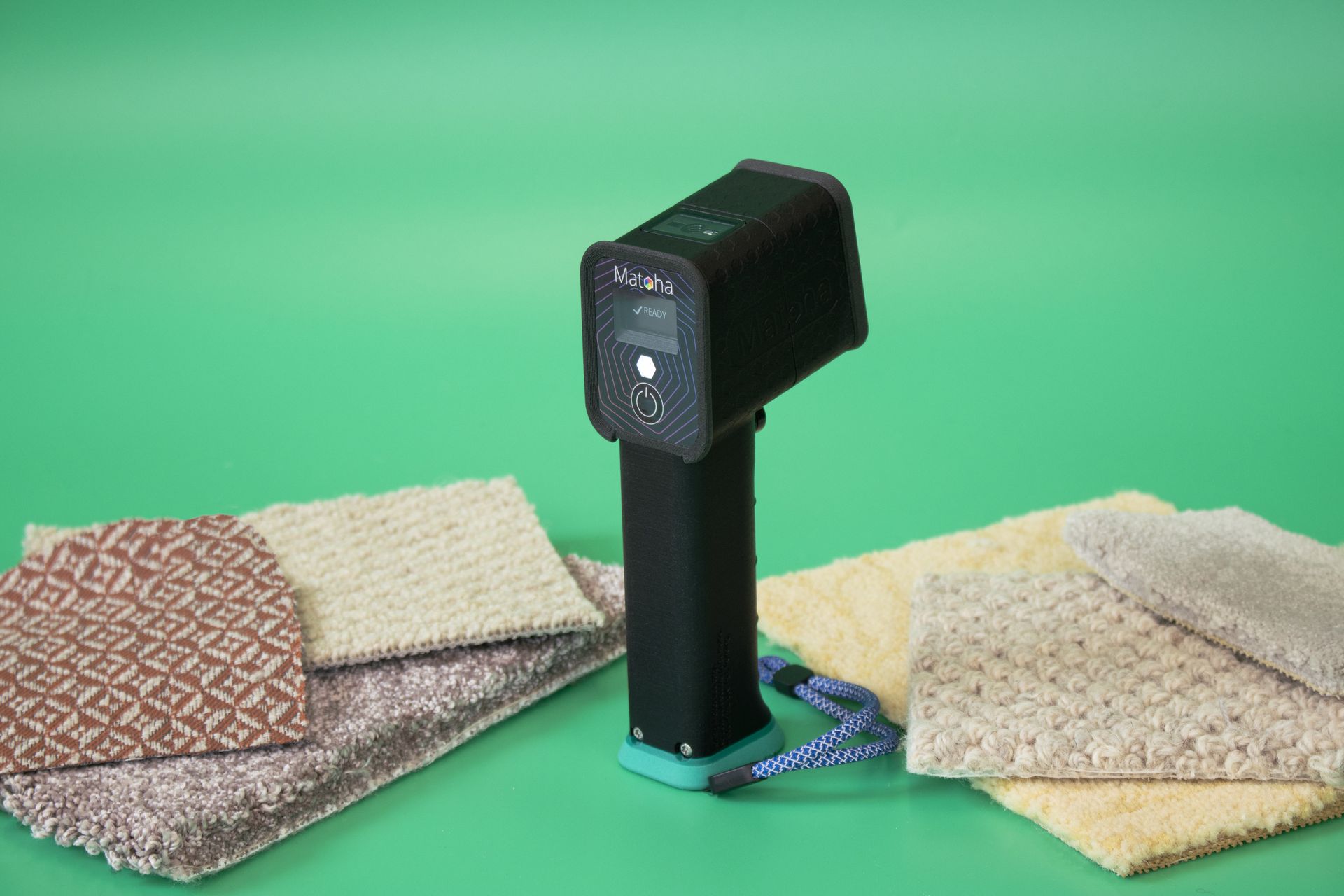
Matoha, spun out of Imperial College London, solved that problem: identifying fibre composition, blends and condition in unsorted textiles, in real time, at industrial speed. A lab spectrometer can do the same test, but it costs tens of thousands of pounds and needs a trained operator, so it never leaves the lab. Matoha built sensors and AI that do the same job in seconds, at the push of a button, cheap and small enough to put in a person's hand, on a bench, or inside a robotic gripper.
In brief:
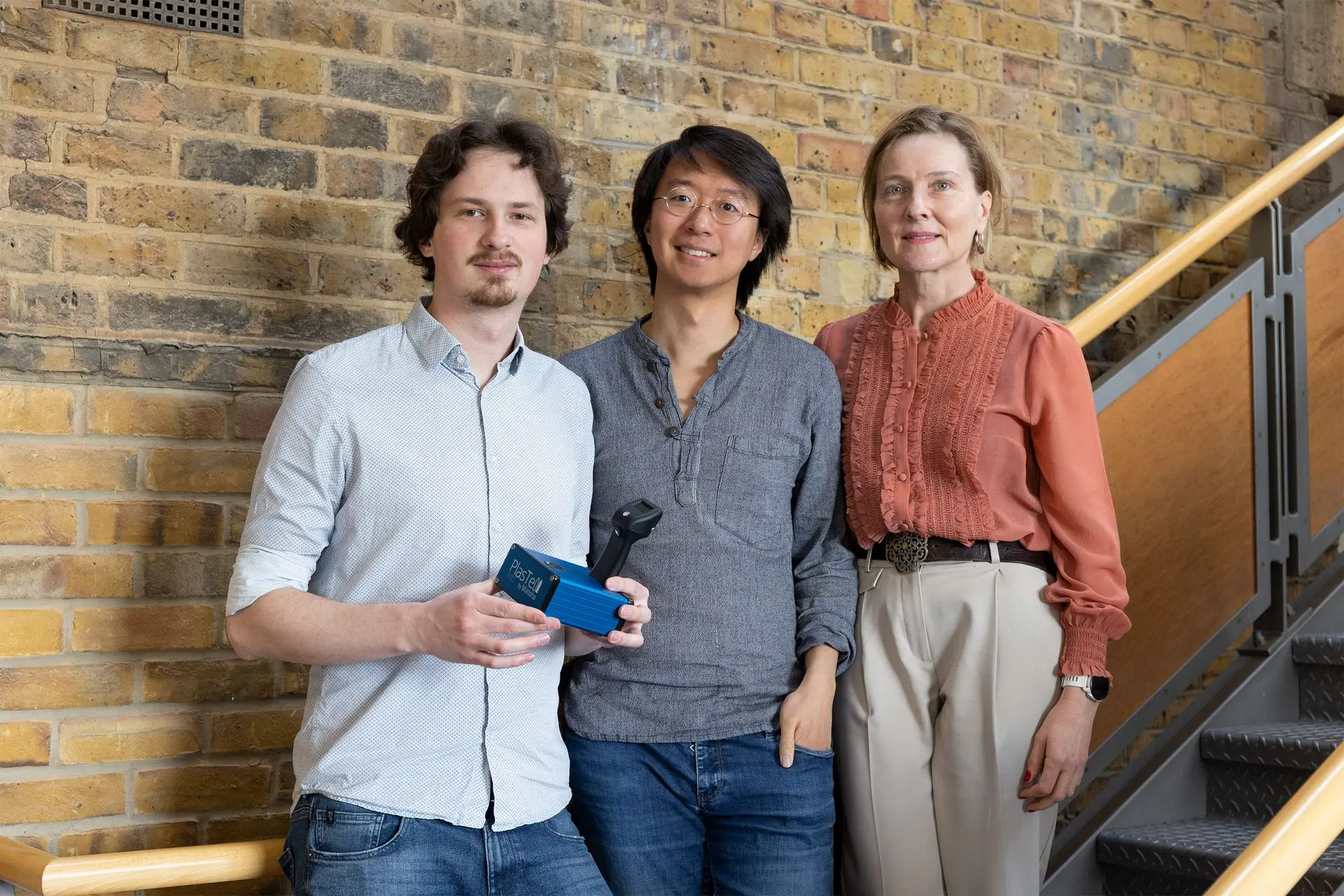
Matoha's founding team came directly out of Imperial College London's materials and physics research, with the commercial experience to turn a lab instrument into a device that survives daily use on a sorting line.
Martin Holicky, PhD — CEO. Imperial College London.
Hans Chan, DPhil — CTO. University of Oxford
Lieve Vanrusselt — Chief Development Officer.
The material intelligence layer robotics is missing. Robots keep getting better at moving and things like gripping, releasing, placing. What they still can't do is tell what's in their hand. Matoha built that missing piece, starting with one of its hardest cases: unsorted textiles.
Already deployed, not a demo. 1,000+ devices across 60+ countries and more than 30 million measurements logged is real field data for a hardware company at this stage, from a product that runs in daily use today.
Built to generalise beyond textiles. The same core is already sold as three products (textiles, plastics, flooring) and one of Matoha's two filed patents covers a version built directly into a robotic gripper.
A team that knew the problem first. The founders came out of Imperial's materials research, so they understood how sorting actually works before they built a device for it.
How it works, in plain terms. Matoha's device shines near-infrared light onto a material and reads how that light is absorbed. Every material has a distinctive absorption pattern, effectively a molecular fingerprint. An AI model trained on those patterns matches the reading against known materials and returns an identification in seconds.
The problem it solves. Sorting and recycling operations lose value at every step where a machine, robot or person can't quickly identify what a material actually is. Manual identification is slow and inconsistent; lab spectrometers are accurate but too expensive and complex to put on a sorting line or inside a robotic hand. It's the same gap holding back automated sorting and robotic material handling more broadly.
Key features and benefits: