Autonomy is stuck. Self-driving cars, industrial robots, and drone-defense systems all depend on the same three senses — cameras, LiDAR, and radar — and all three break down exactly when it matters most. Cameras and LiDAR lose reliability in fog, rain, snow, or darkness; conventional radar can "see" through weather but can't resolve fine detail. The result: sensor stacks that are expensive, fragile, and still not good enough to get autonomous systems past Level 2/3 — or to close the gaps in Europe's air defenses against small drones.
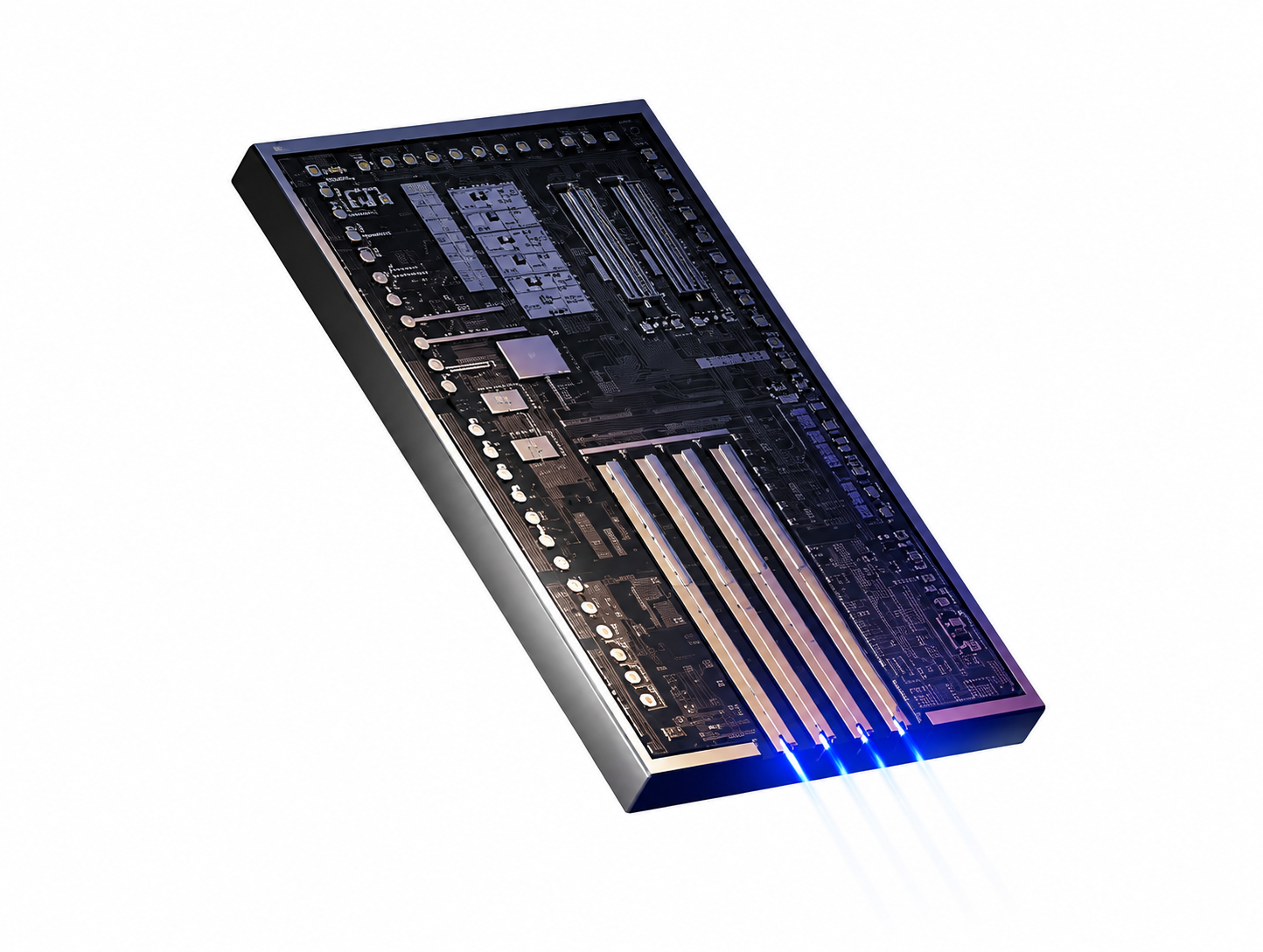
Xavveo, a Berlin-based deep-tech company, set out to fix this at the physics level rather than patch it with more software. Its distributed photonic radar transmits radar signals over optical fiber instead of copper, turning a network of compact sensor nodes into one large, coherent "virtual antenna" — delivering angular resolution below 0.1°, comparable to LiDAR, while retaining radar's all-weather robustness.
Key credentials:
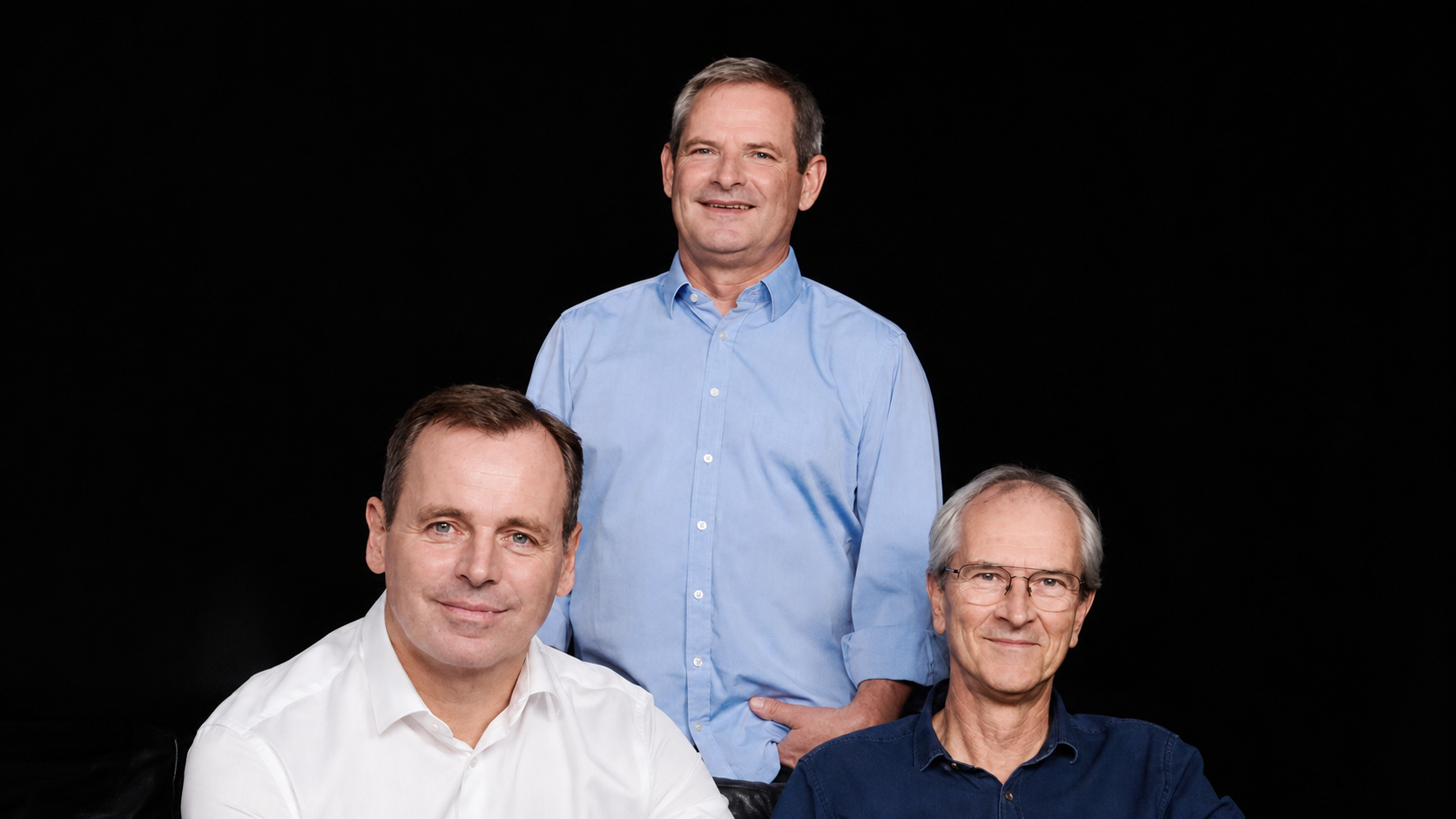
Xavveo was founded by a team that has already built and sold one silicon-photonics company together — this is not their first deep-tech venture, and it shows in how quickly they've moved from lab demo to installed hardware and fielded defense products.
"Autonomous vehicles represent one of the most complex engineering challenges of our time. Once fully deployed, AVs will democratise mobility and significantly reduce carbon emissions."— Dr. Sven Otte, CEO
Dr. Sven Otte, Co-Founder & CEO. Around 25 years of experience in semiconductors and optical communications, including senior leadership roles at established technology companies. He previously co-founded Sicoya, a silicon-photonics company he helped build and take through to a successful exit. At Xavveo, he leads company strategy and OEM/defense partnerships.
Dr. Stefan Meister, Co-Founder & CTO. Over 20 years of experience in silicon photonics and inventor on 20+ patents. He co-founded and served as CTO of Sicoya, where he led development of silicon-photonics transceiver technology, and now directs Xavveo's core photonic radar architecture.
Dr. Ulrich Keil, Co-Founder & VP Engineering. Around 24 years of experience in IC design and semiconductor research, with prior management roles at Intel and Sicoya. He leads engineering for Xavveo's distributed photonic radar platform, from chip design through system integration.
Picks and shovels for the autonomy transition. Every path to higher levels of vehicle autonomy — and every serious counter-drone system — runs into the same bottleneck: perception, not compute. Xavveo is building the sensing layer that autonomous cars, robots, and defense platforms will all need, giving it two large, independent demand curves pulling on the same core technology.
Solving the industry's hardest sensing problem. Cameras and LiDAR degrade in poor weather and low light; conventional radar can't resolve fine enough detail to replace them. Xavveo's distributed photonic architecture uses optical fiber to distribute radar signals and combine them into one large coherent aperture, giving LiDAR-class angular resolution with radar's native resilience to fog, rain, snow, and darkness.
Real customers, not just lab demos. Xavveo already has hardware in the field: an active automotive collaboration with Volkswagen through the publicly funded LiRaS research consortium, and a fielded counter-drone product line (PAIR-500/PAIR-5000) addressing a well-documented capability gap in European air defense.
Right team, right moment. The founders have done this before: they built and exited a silicon-photonics company together, understanding both the hard science and the discipline of getting exotic hardware to a manufacturable, CMOS-compatible product — at a moment when European governments are urgently prioritizing sovereign sensing and drone-defense technology.
How it works, in plain terms: Instead of a single radar unit bolted to one spot, Xavveo places small sensor nodes around a vehicle's perimeter (or across a protected site) and connects them with optical fiber back to a central processing unit. Because the signals travel as light rather than electricity, they can be combined with extreme precision — turning a set of small, cheap sensors into one very large "virtual" radar antenna, giving sharp resolution the same way a bigger telescope lens resolves finer detail.
The problem it solves: Autonomous systems today stitch together cameras, LiDAR, and radar because no single sensor is good enough on its own. That forces expensive, complex, calibration-heavy sensor stacks that still aren't reliable enough for full autonomy — and, in the defense context, leaves gaps in detecting small, low-and-slow drone threats that conventional radar refreshes too slowly to track. Xavveo's distributed photonic radar is designed to be the single sensor that works everywhere the others don't.
Key features and benefits: